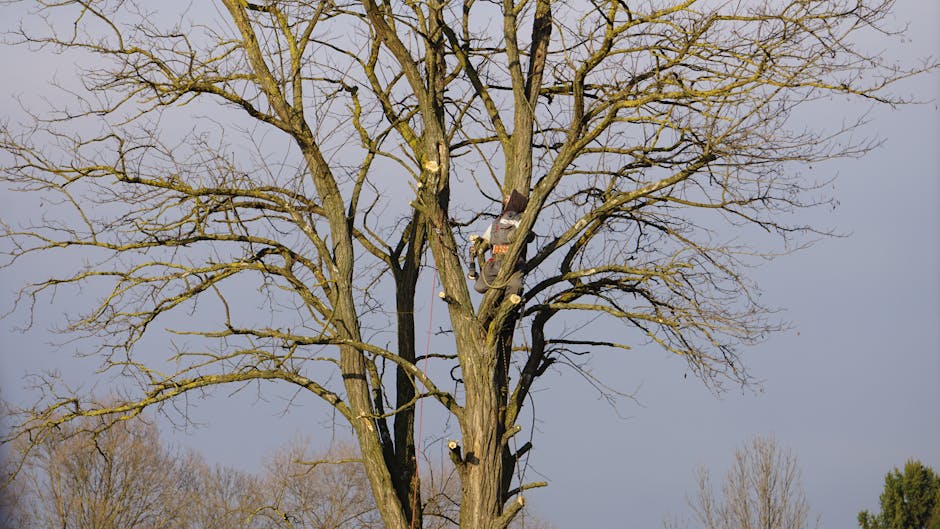
Bromley Council tree work rules what local gardeners must know

If you garden in Bromley, tree work is not just a matter of getting the ladders out and making a start. The rules around protected trees, consent, safety, and waste handling can shape what you can legally do, what you should leave to a professional, and what needs checking before the first cut is made. That is the reality behind Bromley Council tree work rules what local gardeners must know.
In practical terms, the job is often simple: prune a boundary tree, reduce a canopy, remove deadwood, or clear a risky branch after a windy week. But one overlooked restriction can turn a straightforward garden job into a complaint, a delay, or a costly mistake. This guide breaks the whole thing down in plain English, so you can work confidently, avoid common traps, and decide when a tree is a gardener's job and when it needs specialist attention.
Why Bromley Council tree work rules what local gardeners must know Matters
Tree work looks routine until a council restriction appears on the scene. In Bromley, as in many London boroughs, the same tree can sit under different forms of protection depending on its location, condition, or setting. That means a gardener who is usually trusted to keep a garden neat and manageable may still need to pause before pruning, felling, or even lifting the canopy a little higher than planned.
The main reason this matters is simple: trees are often part of the character of a property, but they are also part of a wider planning and environmental picture. A healthy tree on a boundary line can affect light, shade, privacy, wildlife, drainage, and neighbour relations all at once. One tidy cut can improve a garden. One careless cut can cause stress, damage, or a disagreement that drags on for weeks. Not ideal, really.
For local gardeners, the rules also matter because clients expect certainty. They want to know whether a tree can be pruned now, whether a permit or consent is needed, and whether the work is safe. If you can explain that clearly, you build trust fast. If you cannot, the client may assume the job is risky or unprofessional. To be fair, that is not always fair on the gardener - but it is how people judge the work.
There is also a commercial side. If you offer regular garden maintenance, hedge trimming, or tree-related services, clear knowledge of council expectations helps you quote accurately and plan work properly. A simple garden tidy can suddenly become a specialist tree task. A hedge can conceal a protected stem. A dead branch can look harmless from the ground but still require careful handling. The difference is often in the detail.
Expert summary: When tree work is involved in Bromley, the safest approach is to check first, cut second. A little checking at the start usually saves a lot of awkwardness later.
How Bromley Council tree work rules what local gardeners must know Works
In everyday terms, tree work rules usually revolve around three questions: is the tree protected, is the work genuinely necessary, and is the method appropriate for the job? If the answer to any of those is uncertain, the gardener should slow down and investigate before starting.
Here is how it tends to work in practice. You identify the tree or trees involved, note their location, and consider whether they might be protected by a Tree Preservation Order or lie within a conservation area. Those are the two big planning-related issues many gardeners meet first. If either applies, you may need permission before carrying out certain types of work. Sometimes routine maintenance is allowed; sometimes only urgent safety work is justified. The details matter.
The other side of the equation is good arboricultural practice. Even when formal permission is not required, the work should still be carried out in a way that supports tree health and garden safety. A quick hack job may solve an immediate issue but create future problems such as weak regrowth, imbalance, decay entry, or an unhappy neighbour staring at a lopsided crown over the fence at 7:30 on a damp Tuesday morning.
It also helps to understand the difference between common garden work and higher-risk tree work. Light pruning, crown cleaning, and deadwood removal may be manageable in some situations. Larger reductions, felling, stump-related decisions, or trees close to structures usually need more planning and often specialist equipment. The bigger the tree and the tighter the space, the more you want a proper method statement in your head before the saw comes out.
For jobs that involve more than routine pruning, many gardeners choose to coordinate with a specialist service such as tree lopping and removal so the work is handled safely and in line with local expectations. That does not mean every tree job needs a specialist contractor, but it does mean judgment counts.
Another practical point: council rules do not sit in isolation. They overlap with neighbour considerations, property boundaries, wildlife sensitivities, and general safety duties. If a tree overhangs a driveway, shades a lawn, or drops branches onto a path, you may be balancing several priorities at once. That is why a careful pre-check saves time later.
Key Benefits and Practical Advantages
Knowing the Bromley approach to tree work rules brings a few clear benefits, and honestly they are bigger than they first appear.
- Less risk of enforcement problems: If you check protections early, you are far less likely to carry out work that should have been approved first.
- Better client communication: A clear explanation of what can be done, what cannot, and why gives clients confidence.
- Cleaner quotes: You can price routine pruning differently from protected-tree work or more technical removals.
- Safer site planning: Tree work often changes access, drop zones, and waste volumes, so planning matters.
- Healthier trees: Work done properly tends to keep trees stable, balanced, and more resilient over time.
- Better neighbour relations: This one is underrated. Fewer disputes over overhanging limbs and boundary lines means fewer headaches for everyone.
For many gardeners, the hidden benefit is confidence. You stop second-guessing every job. You know when to trim, when to pause, and when to bring in support. That confidence shows in your work, and clients feel it straight away.
If tree work is part of a wider garden service package, it can also sit neatly alongside garden maintenance or hedge trimming, which helps keep outdoor spaces in order without turning every visit into a surprise project.
Who This Is For and When It Makes Sense
This topic is relevant to a few different people, and the needs are not quite the same for each one.
Homeowners need it because trees can affect light, privacy, safety, and the value of the garden. If you are planning seasonal pruning, branch reduction, or removing a storm-damaged limb, you need to know whether any permission or checks are required before action is taken.
Local gardeners and landscapers need it because they are often first on site. The client may ask for a quick cutback, but the gardener is the one who has to spot warning signs. One of the most common mistakes is treating all green work the same. It is not the same. A hedge is not necessarily a tree, and a tree growing inside a hedge line still deserves separate consideration.
Property managers and landlords also need the rules because trees can become a maintenance and liability issue quite quickly. A branch that blocks a path, sheds onto a driveway, or rubs against a roof needs an organised response, not a guess.
Developers and landscape projects may need a more formal check, especially if the work forms part of a wider redesign. If tree work sits inside a new layout, it can affect access, screening, drainage, and future planting. That is where landscape gardening and practical tree planning start to overlap nicely.
It makes sense to focus on council tree rules any time the work involves:
- visible pruning beyond light tidying
- branch removal near boundaries or buildings
- trees that look mature, prominent, or long established
- trees in conservation-style settings or older streets
- storm damage, deadwood, or signs of weakness
- work requested by a neighbour, landlord, or managing agent
Step-by-Step Guidance
If you are dealing with tree work in Bromley, use a simple method rather than improvising. It keeps the job calm, which is half the battle.
- Inspect the tree properly. Check size, species if known, condition, overhang, and proximity to buildings, fences, and paths. Look for dead branches, splits, leaning, or signs of decay.
- Identify whether the tree might be protected. Ask whether a Tree Preservation Order is known, whether the property sits in a conservation area, or whether the tree is part of a larger planting scheme. If you are unsure, stop there and confirm before cutting.
- Separate urgent safety work from routine maintenance. A hanging branch after a storm is a different matter from cosmetic reshaping. Do not mix the two up.
- Define the goal of the work. Is the aim to reduce risk, restore shape, improve light, clear a roof line, or remove deadwood? A clear objective prevents overcutting.
- Choose the least harmful method that achieves the result. That might mean selective pruning instead of heavy reduction, or staged work instead of one hard hit.
- Plan access, drop zones, and waste handling. Branches do not just disappear. They have to go somewhere, and the route through a garden matters more than people think.
- Use appropriate tools and protective equipment. Ladder use, pole tools, saws, gloves, eye protection, and chainsaw protection should all match the risk level of the task.
- Document what was done. Even a simple job benefits from a brief note, especially if the work was requested because of damage or safety concerns.
- Finish with a tidy site and a final check. Look for hanging debris, trip hazards, and any cuts that need monitoring. The garden should look better, not just more hacked about.
That last point sounds obvious, but it is where many rushed jobs fall apart. You will know the difference when you see it. A good tree job leaves the space feeling settled again.
Expert Tips for Better Results
After enough site visits, a few habits stand out as especially useful.
First, work with the tree's shape rather than against it. Trees do not respond well to repeated heavy cutting just because it is convenient. Small, sensible decisions tend to age better. If a branch is awkward, remove or reduce it for a reason. Not just because it is there.
Second, treat pruning cuts as future growth decisions. Every cut changes where energy goes next. A clean, well-placed cut can encourage manageable growth. A poor one can trigger dense regrowth that ends up creating more work later. A bit of restraint goes a long way.
Third, think about the garden as a whole. If a tree throws heavy shade over turf, beds, or a patio, the solution may not be to butcher the tree. Sometimes the better answer is a combination of pruning, planting choices, and broader garden planning. This is where tree work, lawn mowing, and general outdoor care all connect.
Fourth, do not assume a neighbour's request gives permission. It is common enough: someone says the branches are overhanging their side, so they want them cut back immediately. But if the tree is protected, the right process still matters. Neighbourly pressure is not the same as approval.
Fifth, keep one eye on the season. Different times of year can affect how trees look, how much debris they drop, and how the site feels. A damp winter morning and a bright summer afternoon are not the same working conditions at all. Temper the plan accordingly.
One more thing. If a job starts to feel larger the moment you arrive, that is not a failure. That is information. Good gardeners adapt. Great ones admit when a task has quietly turned into something else.
Common Mistakes to Avoid
Most tree-work problems come from a small number of very normal mistakes. Nothing dramatic. Just the sort of thing that happens when a job looks quicker than it is.
- Starting work before checking protection status. This is the big one. If there is any chance the tree is protected, check first.
- Confusing a hedge with a tree and vice versa. A mixed boundary can fool people. The shape on the day does not always match the legal or practical reality.
- Cutting too hard to save time. Heavy reduction may look decisive, but it can damage form and health.
- Ignoring signs of instability. Cracks, fungi, hollow sections, leaning, or brittle limbs deserve proper attention.
- Failing to plan debris removal. One small cut can create a surprising amount of waste, and wet wood is heavier than it looks.
- Not checking boundaries and access routes. Especially in tight Bromley gardens, one awkward move can scrape fences, brickwork, or paving.
- Assuming all work is purely cosmetic. Sometimes the safest option is not the neatest-looking one, at least not straight away.
There is also a softer mistake: not communicating clearly. People often forget that clients may not know the difference between crown thinning, crown lifting, and reduction. A brief explanation prevents misunderstandings, and it saves the awkward "I thought you were just trimming it a bit" conversation later. We have all been there in one form or another.
Tools, Resources and Recommendations
You do not need a truck full of specialist kit to understand the rules, but you do need a reliable way of working. For many local gardeners, the most useful tools are the unglamorous ones.
- Basic site assessment notes: A notebook or phone note helps track tree location, visible issues, and any likely restrictions.
- Camera or phone photos: Useful for before-and-after records, client confirmation, and spotting issues that are easy to miss on site.
- Measuring tape or range estimate: Helps when deciding if a tree is large enough to justify a more cautious approach.
- Appropriate pruning tools: Clean secateurs, loppers, saws, and pole tools for controlled work.
- Protective gear: Gloves, eye protection, chainsaw PPE where relevant, and sturdy footwear.
- Waste sacks, tarps, and loading support: Because the clean-up is part of the job, not an afterthought.
For service planning, it helps to look at the wider garden workload too. A tree job may slot into a broader visit that includes garden clearance, routine maintenance, or even a larger upgrade through landscaping. That approach often saves time and keeps the whole outside space coherent.
If you are reviewing budgets, the most sensible next step is usually to compare the cost of doing a small, compliant job now against the cost of fixing a rushed one later. For enquiries and tailored pricing, see pricing and quotes.
And if you are uncertain about service scope, liability, or site safety, it is worth checking a provider's approach to insurance and safety before proceeding. That sounds dull. It is not dull when something goes wrong.
Law, Compliance, Standards, or Best Practice
Tree work in Bromley may involve planning controls, property law, neighbour boundaries, and general health-and-safety responsibilities. Because those layers can overlap, careful wording matters here. The exact position on any individual tree depends on the site, the tree itself, and any protections or conditions attached to it. So treat general guidance as a starting point, not a substitute for checking the specific case.
From a practical point of view, the safest UK standard is to avoid unnecessary damage and to ensure work is proportionate to the problem being solved. If a tree only needs light maintenance, a light maintenance approach is usually best. If there is evidence of structural weakness or a genuine safety concern, that should be recorded and handled with due care. The principle is simple even if the paperwork is not: do what is needed, no more and no less.
There is also a duty of care angle. Anyone carrying out tree work should think about the safety of the worker, the property, passers-by, and neighbouring land. That includes drop zones, saw handling, ladder stability, and disposal of arisings. Common sense is part of compliance. Not glamorous, but very real.
In customer-facing work, it is also best practice to be transparent. Explain whether the task is routine maintenance, cosmetic pruning, or something that may need formal checking before it goes ahead. If you are dealing with a tree that could be protected, do not bluff your way through. Clients usually prefer a careful pause to a confident mistake.
For businesses that handle mixed outdoor work, it helps to keep policies aligned across service types. A provider who already sets out terms clearly via terms and conditions, service scope via services overview, and responsible waste handling through recycling and sustainability gives a stronger impression of professionalism. That counts.
Options, Methods, or Comparison Table
Different tree tasks call for different approaches. The table below gives a simple comparison that helps gardeners decide where a job sits.
| Method | Best for | Main advantage | Watch out for |
|---|---|---|---|
| Light pruning | Routine shaping, small corrections, seasonal tidying | Low impact and easy to explain to clients | Still check for protections if the tree is substantial |
| Deadwood removal | Branches that are dead, brittle, or dropping | Improves safety without changing the tree too much | Can be more complex than it looks if access is poor |
| Crown thinning | Reducing density while keeping the overall shape | Can improve light and airflow | Over-thinning can stress the tree or make it look patchy |
| Crown reduction | Controlling size near buildings or boundaries | Useful where space is tight | Needs judgement; cutting too hard can trigger poor regrowth |
| Removal | Unsafe, unsuitable, or badly positioned trees | Resolves structural or access issues fully | Most likely to need the strongest checks and the most care |
In real life, the choice is not always tidy. A tree may need deadwood removal now, reduction later, and some replacement planting as part of the longer-term plan. That kind of staged thinking often works best, particularly in smaller Bromley gardens where every square metre matters.
Case Study or Real-World Example
A typical local scenario goes like this. A homeowner in Bromley asks for a boundary tree to be "trimmed back a bit" because it is shading the patio and brushing against a fence. On first glance, it seems straightforward. But once the tree is inspected, it turns out to be mature, visible from the street, and likely to need a more careful approach than a casual cutback.
Instead of rushing in, the gardener checks the tree's likely status, reviews the structure, and separates the work into two parts. The immediate concern is deadwood and a few awkward limbs touching the fence line. The longer-term concern is the crown density and how the tree affects light. The work is then planned in a way that deals with safety and shape without overdoing it.
The result is better for everyone. The patio gets more light. The fence is no longer being rubbed by branches. The tree still looks balanced from the garden and the street. And the client does not have that sinking feeling that the tree has been bullied into submission. Simple enough on paper, but a lot rests on the judgement.
Another common scenario is a post-storm call-out. A branch is hanging low after a windy night and the garden is noisy with movement whenever the wind picks up. In that case, the first job is safety, not appearance. The issue is addressed quickly, documented, and then the broader tree condition is reviewed later. That measured approach is usually the right one.
Practical Checklist
Use this before any tree-related job in Bromley. It is short on purpose.
- Identify the tree clearly and inspect its condition.
- Check whether it may be protected or subject to special controls.
- Confirm the work goal: safety, clearance, shape, or removal.
- Decide whether the work is routine or specialist.
- Look at boundaries, access, and drop zones.
- Consider neighbours, overhanging growth, and visible impact.
- Plan the safest practical method, not the quickest one.
- Make sure the right tools, PPE, and waste arrangements are ready.
- Take photos or notes before starting.
- Leave the site tidy and monitor the tree after the work if needed.
Quick reminder: if anything about the tree's status or stability feels uncertain, pause and verify. That single habit prevents most avoidable problems.
Get a free quote today and see how much you can save.
Conclusion
Bromley Council tree work rules what local gardeners must know is really about working with confidence and care. Trees can be one of the best parts of a garden, but they need the right level of attention at the right time. Once you understand the checks, the risks, and the practical limits, tree work becomes much less intimidating and a lot more manageable.
For gardeners, the sweet spot is clear: know when a job is routine, know when it needs extra checking, and know when to bring in specialist support. That balance protects the tree, protects the client, and protects your reputation too. Not a bad outcome for a morning's work.
And in the end, that is what good gardening is about: calm judgement, clean work, and a garden that feels cared for when you step back and look at it.
Frequently Asked Questions
Do I need permission to prune a tree in Bromley?
Not always, but you should never assume that pruning is automatically allowed. If the tree is protected or in a sensitive area, even routine work may need checking first. The safest move is to confirm the tree's status before any cut is made.
What is the difference between a Tree Preservation Order and a conservation area?
A Tree Preservation Order is a specific legal protection attached to a tree or trees. A conservation area is a wider planning designation that can affect trees in the area. Both can influence whether work needs consent, so they should be checked separately.
Can a gardener do tree work without being a tree surgeon?
Sometimes, yes, especially for light maintenance or straightforward pruning. But once the work becomes technical, high-risk, or likely to involve protected trees, it is smarter to use a specialist or at least get proper guidance. A ladder and optimism only go so far.
What if a tree is overhanging my property?
Overhanging branches can often be reduced back to the boundary, but you still need to consider ownership, protection status, and the health of the tree. It is one of those situations where a quick answer is tempting, but a careful answer is better.
How do I know if a tree is unsafe?
Look for obvious signs such as cracking, leaning, dead limbs, fungus, hollow sections, or repeated branch failure. If you see any of those, the tree should be assessed more carefully before work begins. If in doubt, stop and review rather than guessing.
Is deadwood removal usually allowed?
Deadwood removal is often a sensible and low-impact form of tree care, but it still depends on the tree's protections and the exact circumstances. Even a sensible task can be restricted in certain cases, so it should be checked rather than assumed.
What should local gardeners tell customers before starting tree work?
They should explain what the work is for, whether any checks are needed, how the tree may respond, and whether the job is routine or specialist. Clear communication builds trust and avoids surprise later on.
How much tree work can be done safely in one visit?
That depends on the size of the tree, the access, the condition of the wood, and the available equipment. Some jobs are neatly contained. Others look small from the ground and become a full day's work once you are actually on site.
What is the best time of year for tree pruning?
There is no single answer for every tree, because species, condition, and the purpose of the work all matter. Seasonal timing can affect growth and appearance, so the best approach is to match the timing to the tree and the outcome you want.
Should I keep records of tree work?
Yes, especially if the tree was problematic, storm-damaged, or possibly protected. Simple notes and photos can help if a question comes up later, and they are useful for repeat visits too. Nothing fancy required, just enough to show what was done and why.
Where does tree work fit with other garden services?
It often sits alongside garden maintenance, hedge trimming, garden clearance, and broader landscaping work. If the tree is part of a larger outdoor project, joining the tasks up usually saves time and keeps the finish more consistent across the whole garden.